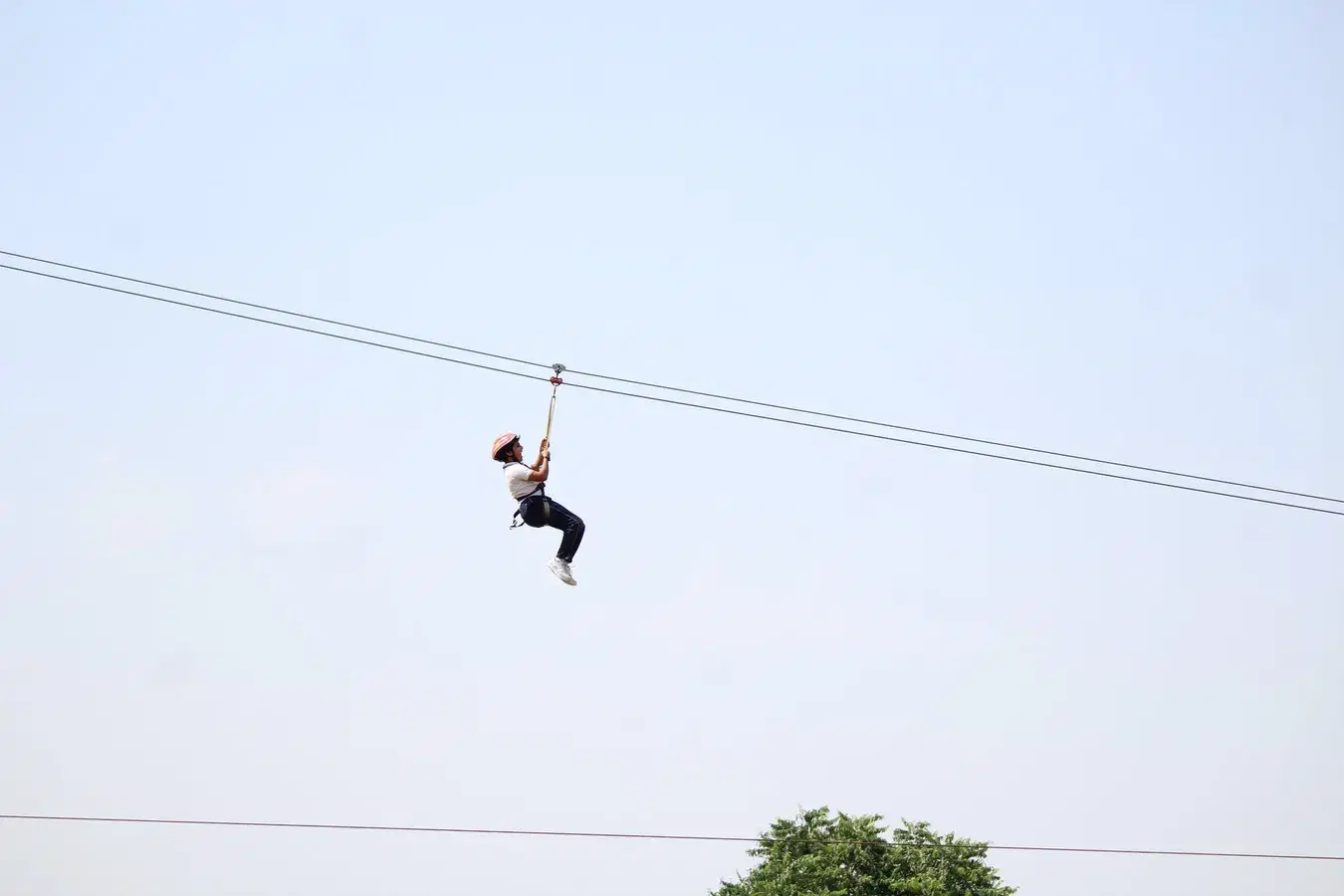
Commercial Zipline Design & Installation in India
Turnkey zipline systems for adventure parks, resorts, schools, defence and tourism destinations — engineered to IS 456 / IS 800 structural codes; Member: ACCT International (since 2021), ATOAI, IAAPI.
- Trusted by defence, government, resorts and schools since 2019
- 1,120 m combined — three-line zipline system, 410 m, 390 m, 320 m plan span (Tawang, Arunachal Pradesh)
- 50,000+ rides completed on a single OXO line (Happyland, Nepal)
- India & Nepal — deserts, beaches, rivers, high-altitude terrain
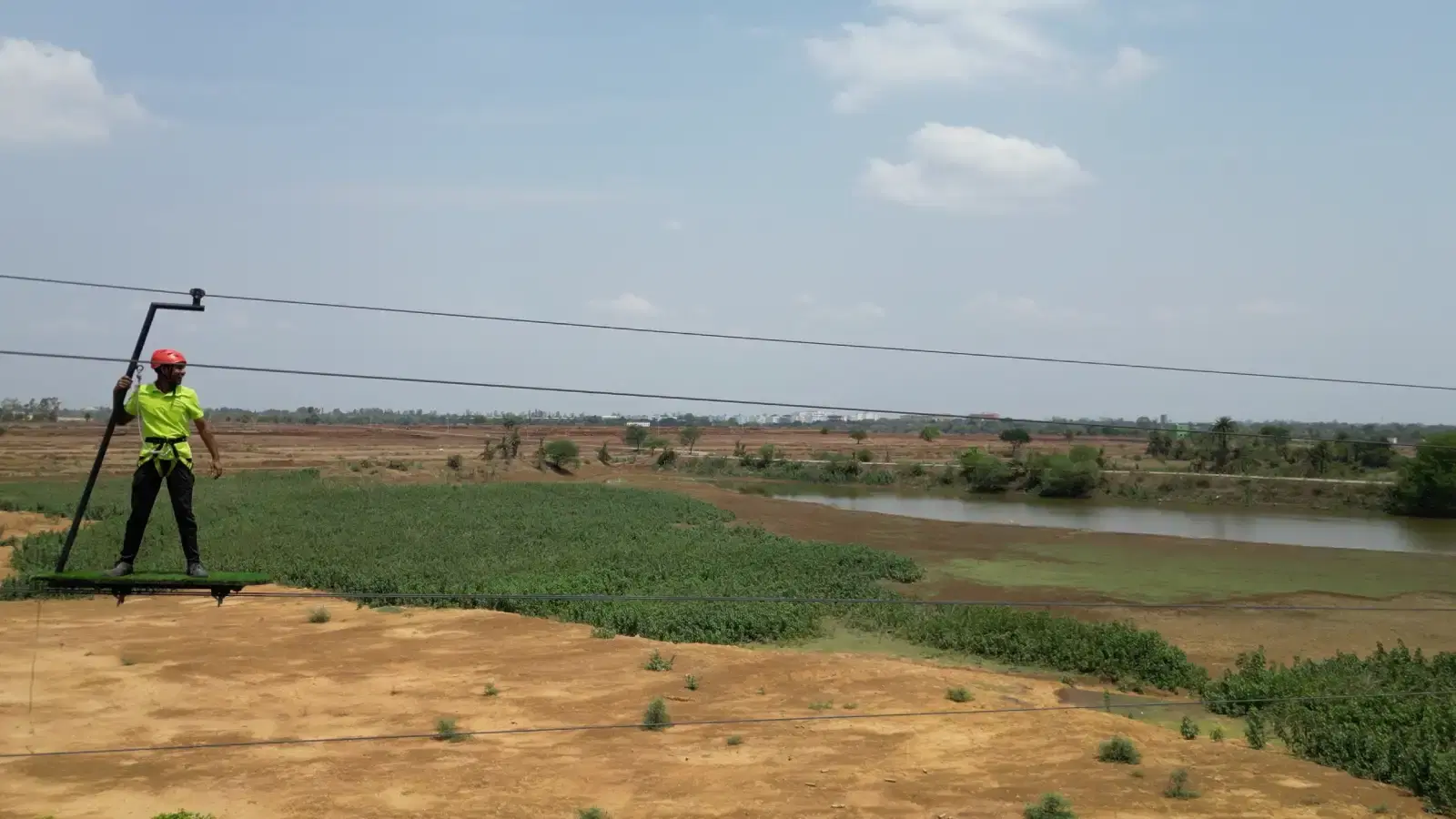
A commercial zipline is an engineered aerial ride in which riders travel along a tensioned steel cable between two anchored points, typically 100 m to over 1 km apart. Built correctly, it is the highest-visibility, highest-recall attraction a destination can install — and one of the fastest to reach payback. OXO Planet has delivered zipline systems across India and Nepal since 2019, from ₹15-lakh resort lines to a three-line, 1,120 m combined government flagship at Tawang.
All spans are stated as straight-line plan distance between towers, not cable length; cable length is greater in every case owing to catenary sag and slope.
- Strong visual landmark driving footfall and destination recall
- Consistent revenue through pay-per-ride and bundled experiences
- High social media visibility and organic marketing value
- Broad demographic appeal across tourists, families, and groups
- Predictable operations with controlled rider flow and throughput
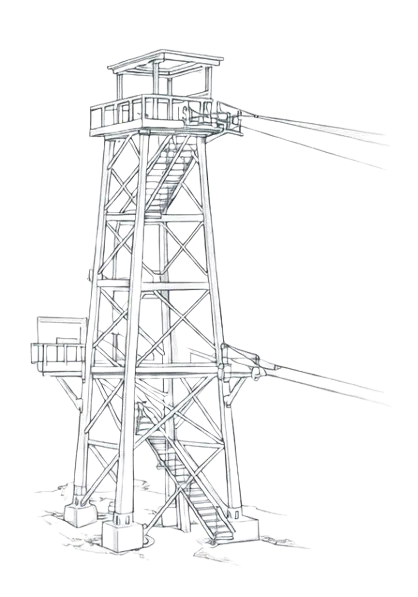
- Entry-Level Zipline₹15–25 lakhs
- Mid-Scale Zipline₹25–45 lakhs
- Premium / Custom Zipline₹45 lakhs and above
- Zipline length, height and terrain are the main cost drivers — longer, higher spans need more cable, stronger towers and more foundation work.
- Single-line, parallel (racing) and return ziplines are priced differently based on cable runs and braking systems.
- Custom towers, launch and landing platforms and additional infrastructure increase the cost.
- The braking system, safety back-up cable, harnesses and trolleys are included; GST is extra.
- Civil work, foundations and site development are quoted separately, and the final price follows a site assessment.
Zipline types at a glance
| Type | Length | Top speed | Riders/hour | Space needed | Indicative cost | Best fit |
|---|---|---|---|---|---|---|
| Short recreational | 50–150 m | 30–40 km/h | 40–60 | Compact, low elevation | ₹15–25 lakh | Resorts, schools, camps |
| Medium scenic | 150–400 m | 40–60 km/h | 30–50 | Valley/river/lake spans | ₹25–45 lakh | Eco-tourism, hill resorts |
| High-speed | 400 m+ | 80–100+ km/h | 20–40 | Steep gradient sites | ₹45 lakh+ | Adventure parks, landmarks |
| Dual / racing | 100–400 m | Matched pair | 60–100 | Two parallel corridors | ₹30–60 lakh | Parks, group venues |
| Urban / rooftop | 80–200 m | 30–50 km/h | 30–50 | Building-to-building | Custom | Malls, cities, towers |
What’s inside the price — component breakdown
| Component | Share of project cost | Notes |
|---|---|---|
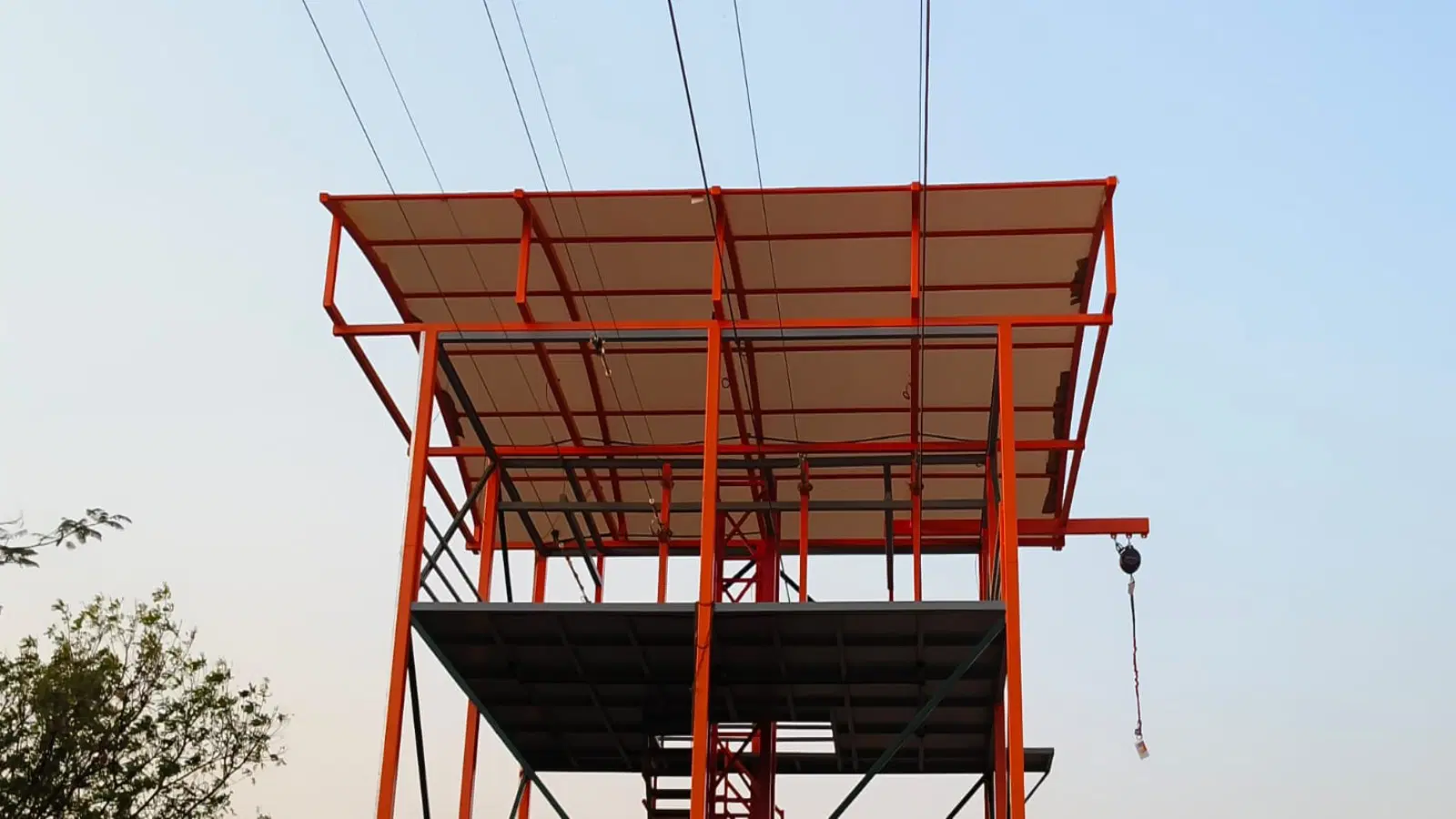
| Towers / launch & landing structures | 40–60% | Biggest variable — natural elevation can reduce this to near zero |
| Wire rope, anchors & tensioning hardware | 20–40% | Cable grade and span-length driven |
| Trolleys, harnesses & PPE | 10–15% | Certified, load-rated equipment |
| Braking system | 2–5% | Passive vs. active/magnetic braking |
| Installation, load testing & commissioning | 10–20% | Team deployment and documentation |
| Design & engineering | 5–10% | Site survey, structural drawings, throughput planning |
GST extra; sheds and site development excluded. Shares are of a typical tower-based project.
Worked example
A 200 m scenic zipline at a resort with usable natural elevation typically lands at ₹16–22 lakh all-in — roughly ₹8,000–11,000 per metre — below the typical mid-scale range because natural elevation removes most tower cost. The same line on flat land needing two steel towers moves to ₹25 lakh+.
5 factors that move the price
- Natural elevation vs. built towers (the single biggest driver)
- Span length and cable specification
- Site access — hill, river and forest sites carry logistics premiums
- Braking type — passive bungee vs. magnetic/auto systems
- Single line vs. dual/racing configuration
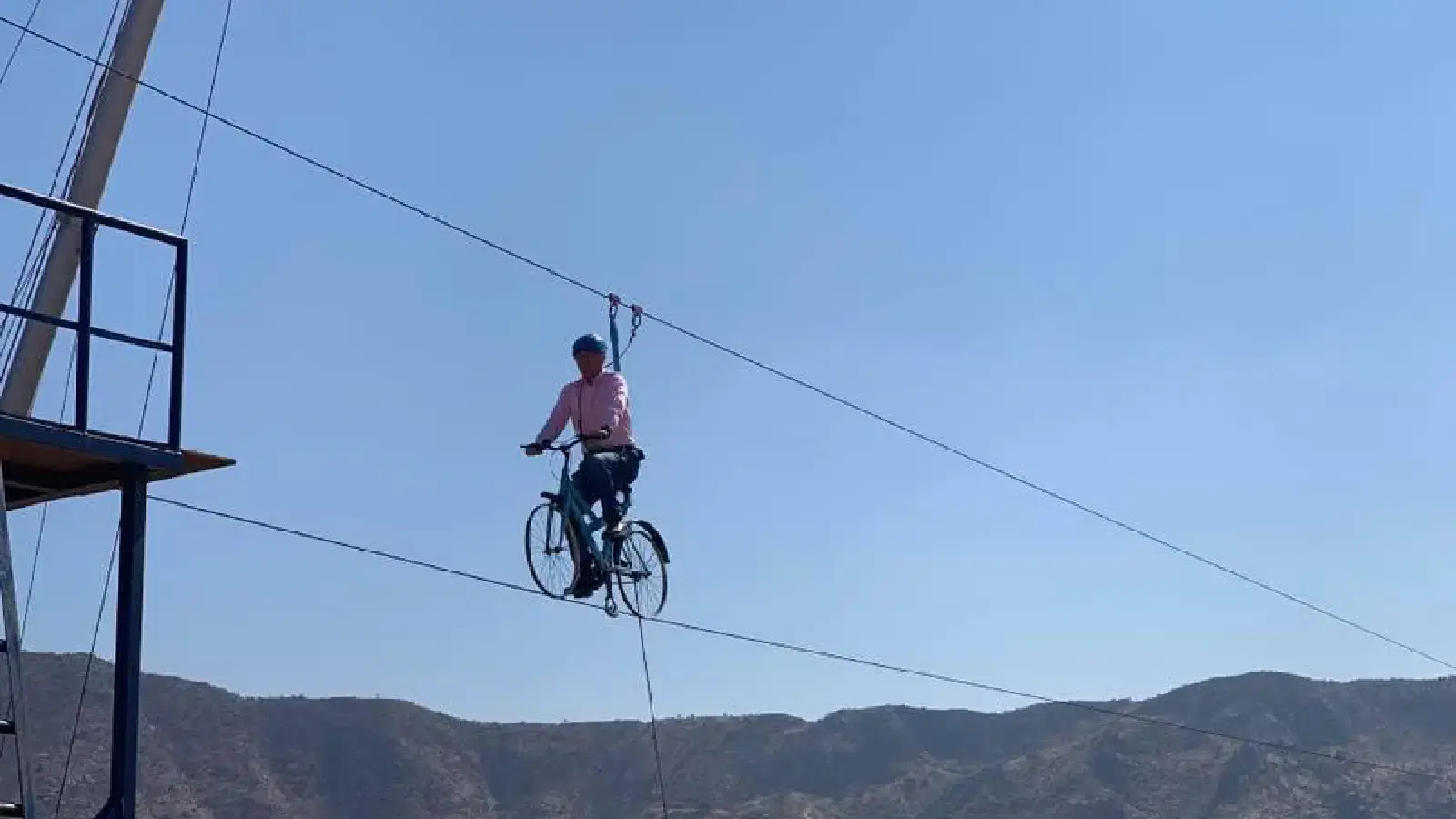
- Karnataka — Vasnudaraa Farms, near Bangalore: dual-cable 200 m zipline and sky cycle handling up to 400 participants per day.
- Telangana — Sreenidhi International School, Hyderabad: zipline as part of India's largest in-campus adventure park with 8+ activities.
- Arunachal Pradesh — Jang Falls Adventure Zone: three ziplines, 1,120 m combined (410 m, 390 m, 320 m plan span), for the Public Works Department, Jang Division.
- Sikkim — Kitchidumra Biodiversity Park, Namchi: 220 m river zipline commissioned by the Namchi Forest & Environment Department.
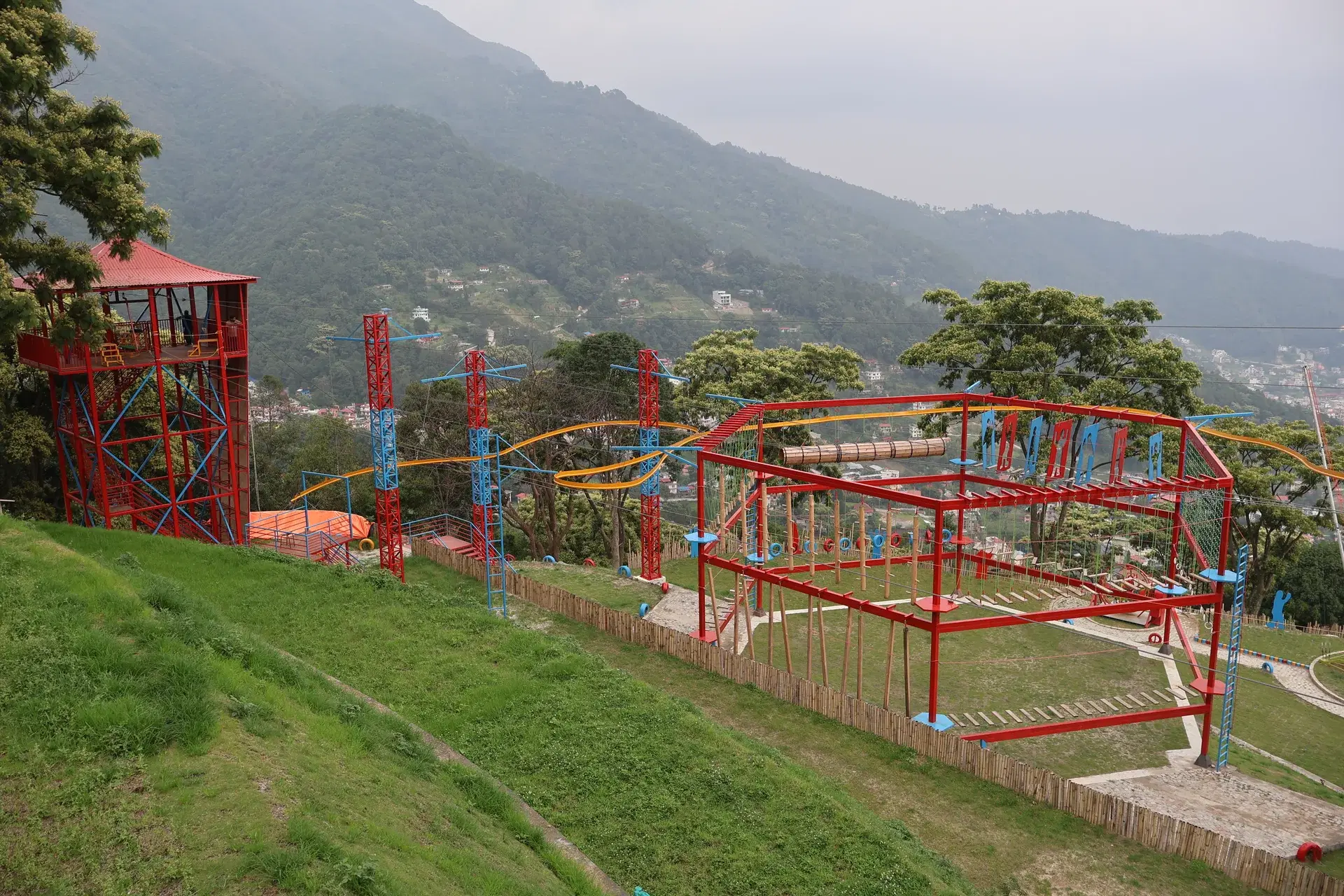
- Nepal — Choudhary Group Adventure Park, Kathmandu: high-altitude zipline and roller coaster zipline in a full-terrain adventure park across the Himalayan foothills.
Related Aerial Attractions
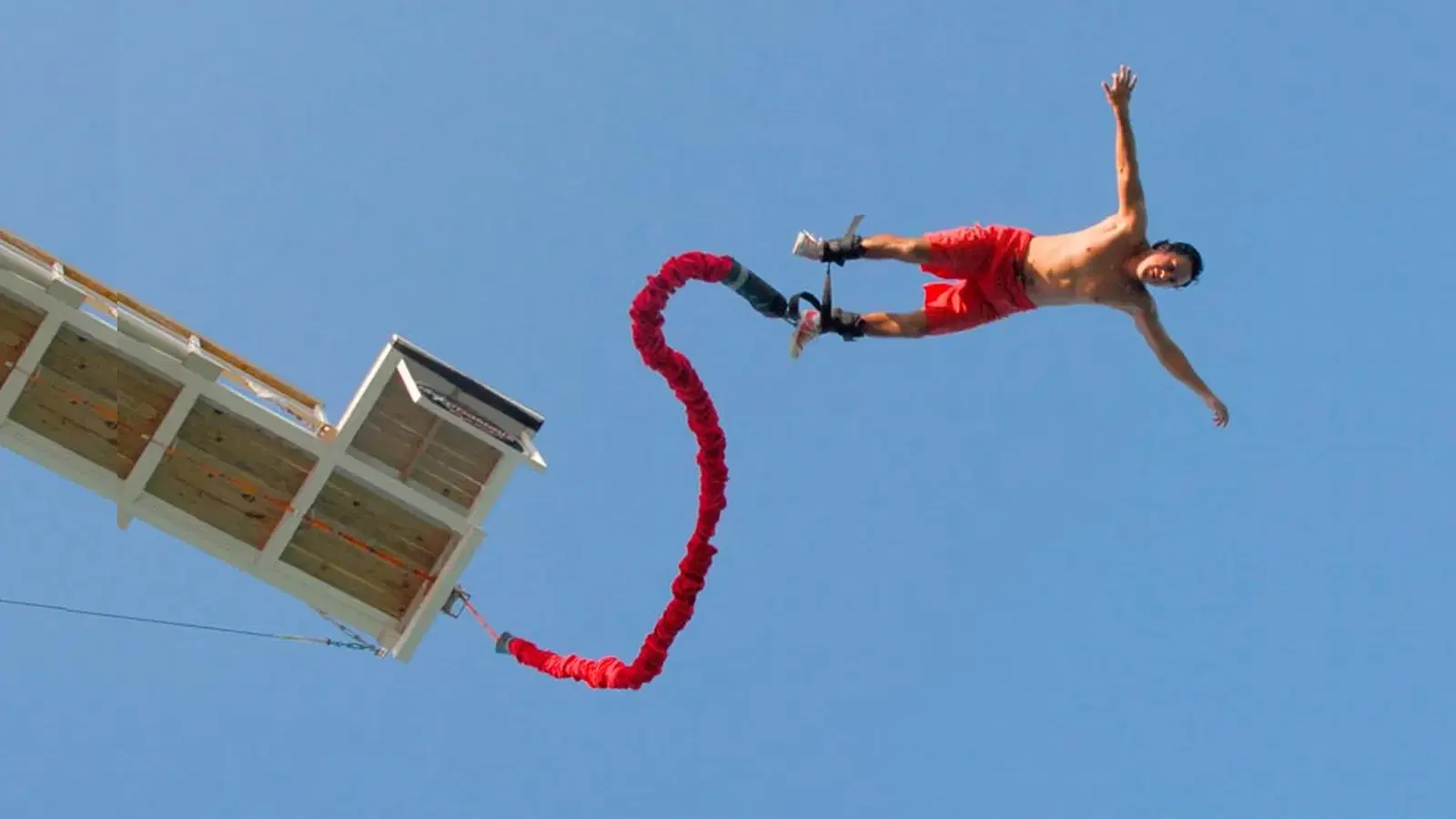
More activities in Aerial Attractions — engineered for safety, throughput, and long-term operations. Explore other systems in this category built by OXO Planet.
Contact Us
Let’s start the adventure
For project-level discussions, a brief call or WhatsApp conversation helps us understand your requirements faster and respond more accurately.