Glass Bridge & Sky Walk Design & Construction

Glass Bridge & Sky Walk Design & Construction

Iconic transparent elevated walkways creating visual immersion and destination branding. Designed for tourism landmarks, hill stations, and resorts seeking a signature non-thrill attraction. Installed across India since 2019.

What It Is & Why It Matters

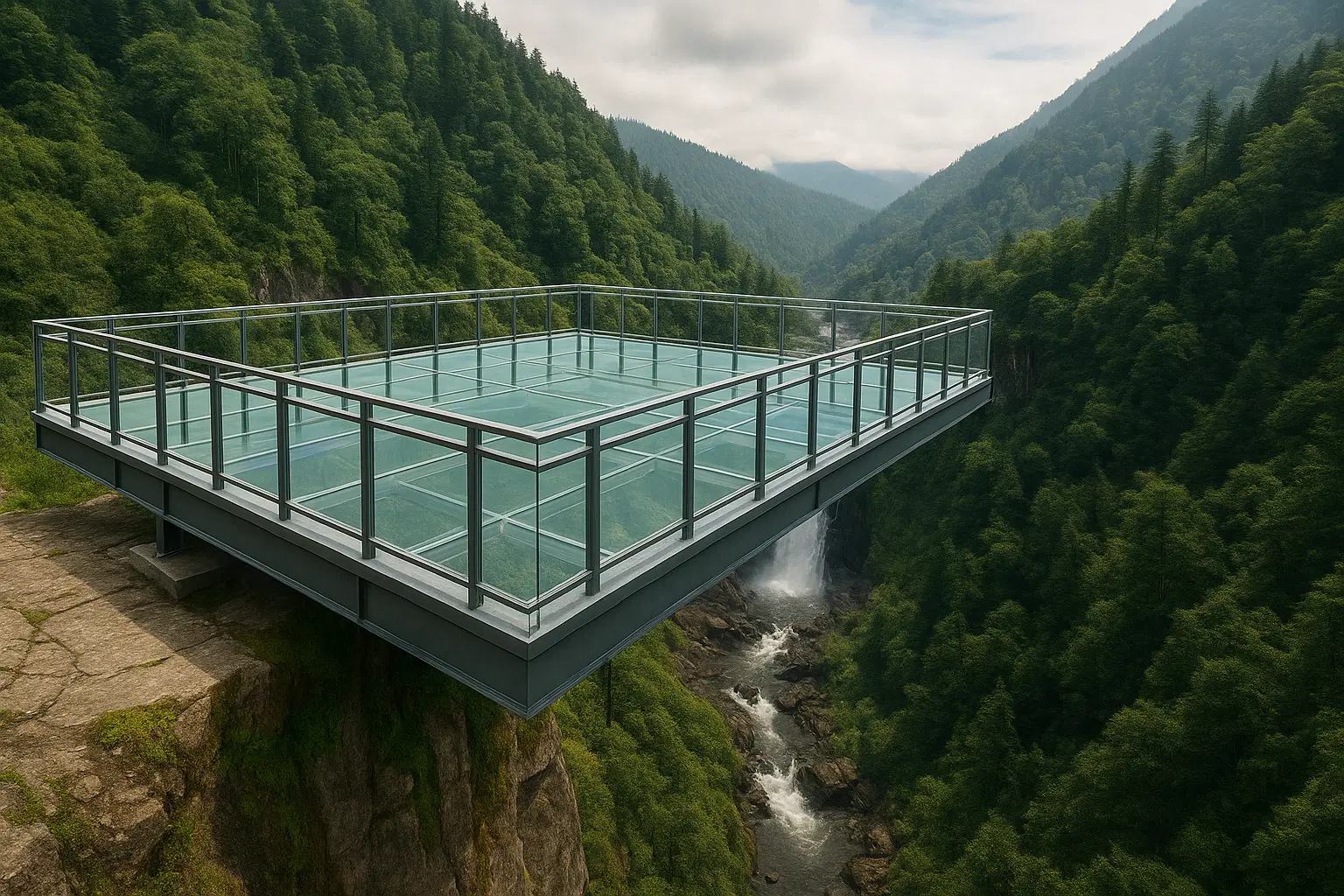
A glass bridge or sky walk is a scenic elevated walkway incorporating transparent flooring to create a visual sense of height and exposure. The experience focuses on perception and immersion rather than physical thrill.

It matters because glass bridges and sky walks create iconic visual attractions that enhance destination branding, encourage photography, and attract a broad, non-adrenaline-seeking audience.

OXO Glass Bridges & Sky Walks — By the Numbers

India's first
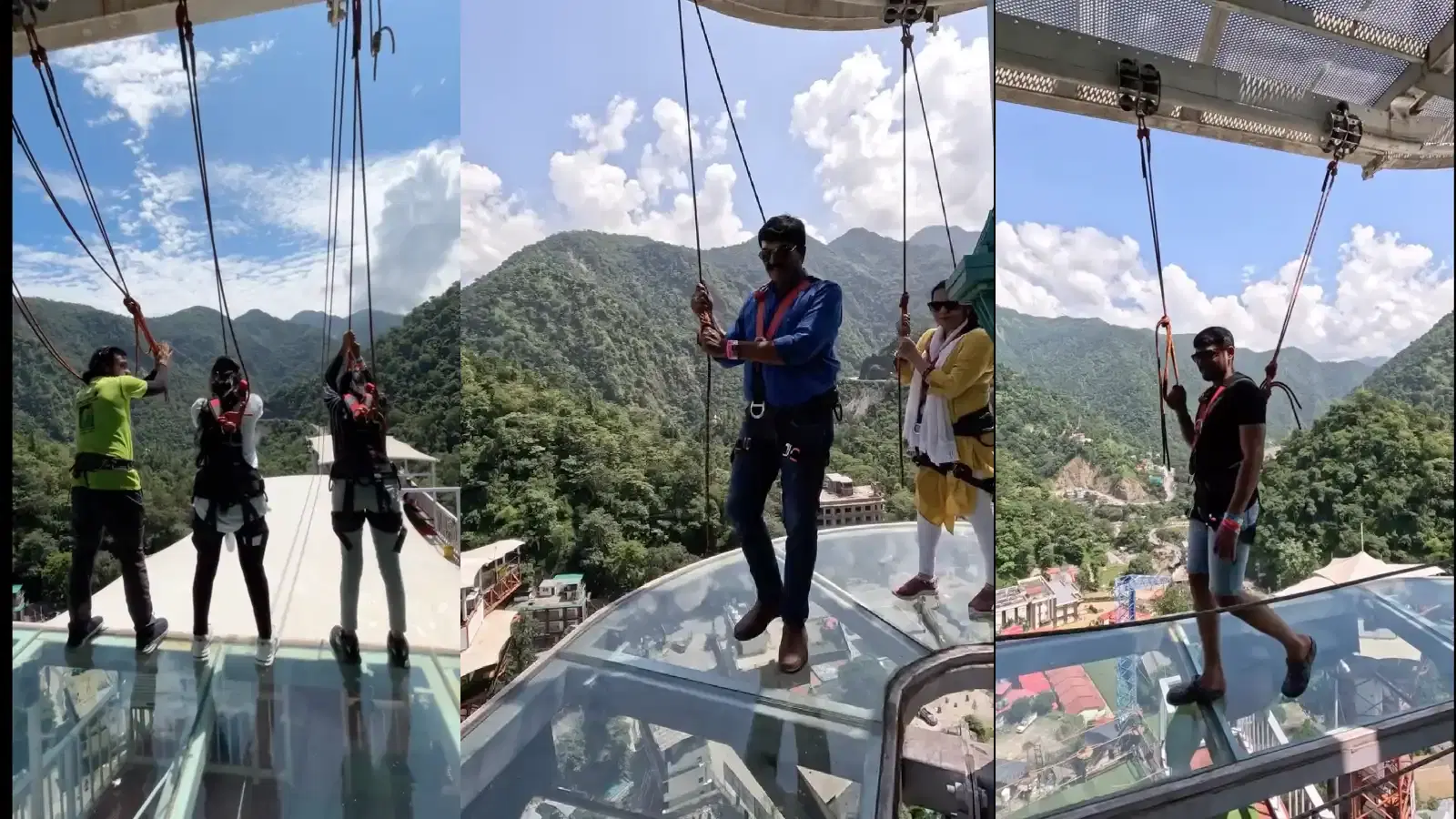
Sky walk with belay over a bungee jump tower, with a glass walk below (D Splash, Rishikesh).
100–300 / hr
High walk-through throughput for tourism destinations.
70+ projects · 300+ activities
OXO Planet's track record across 100+ sites in 20+ states, India and Nepal.

Key Business Outcomes

  • Strong landmark and branding value
  • High visitor participation across age groups
  • Excellent social media and photography appeal
  • Low physical intensity with high experiential impact
  • Steady throughput with simple supervision
Glass Bridge and Sky Walk

Where This Works Best?

Tourism Landmarks
Iconic, high-visibility attractions designed to create strong destination branding and visitor draw
Hill Stations & Scenic Destinations
Elevated viewing experiences leveraging natural valleys, cliffs, and dramatic landscapes
Resorts & Premium Leisure Projects
Signature installations adding exclusivity and premium positioning to hospitality destinations
Urban Attractions & Mixed-Use Developments
Landmark structures creating visual impact, footfall interest, and public engagement

Types & Configurations

Straight Span Glass Bridge
Linear walkway connecting two elevated points. Most common format for cliff-edge and hillside installations.
Curved or U-Shaped Sky Walk
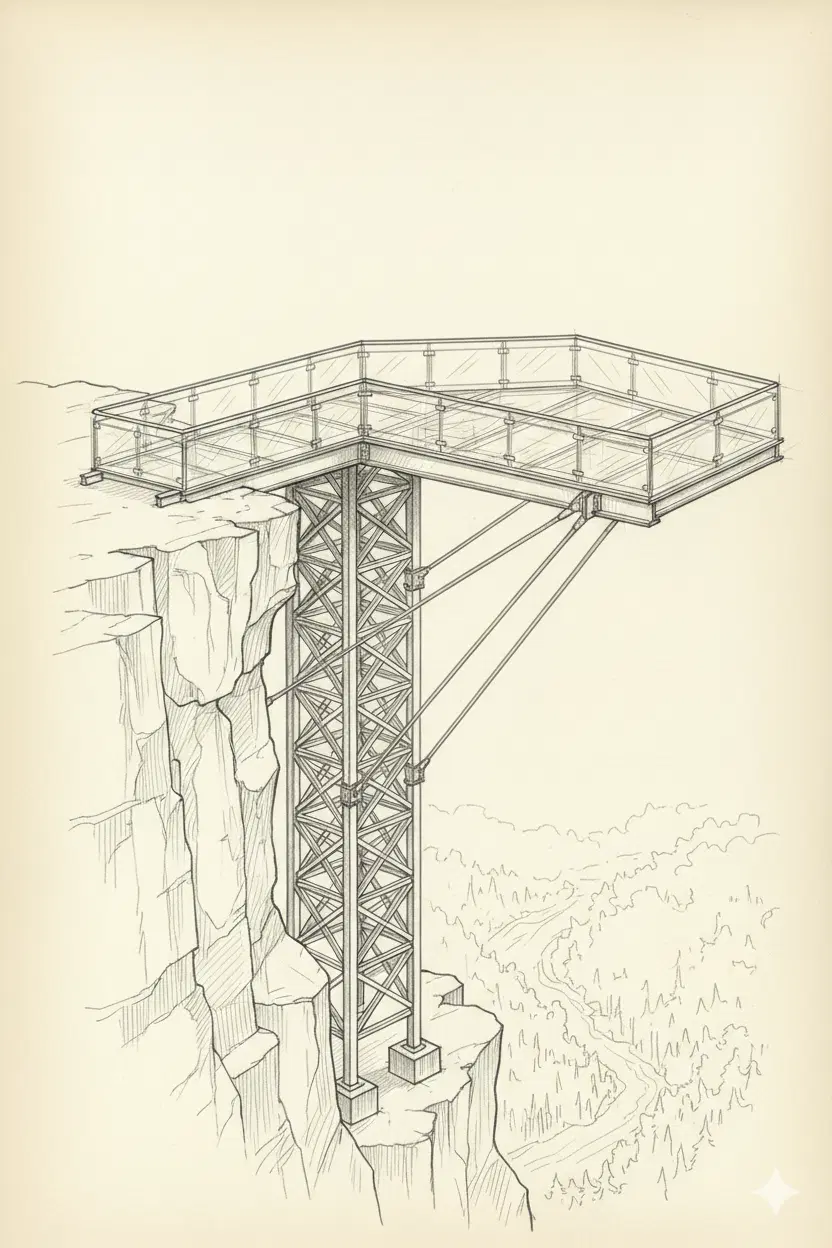
Bridge curves outward from a cliff face or ledge, creating a dramatic overhang experience. Strong visual and photography appeal.
Multi-Level Sky Walk Tower
Vertical tower structure with multiple glass-floored viewing levels. Suitable for flat terrain where natural height is unavailable.
Suspension Glass Bridge
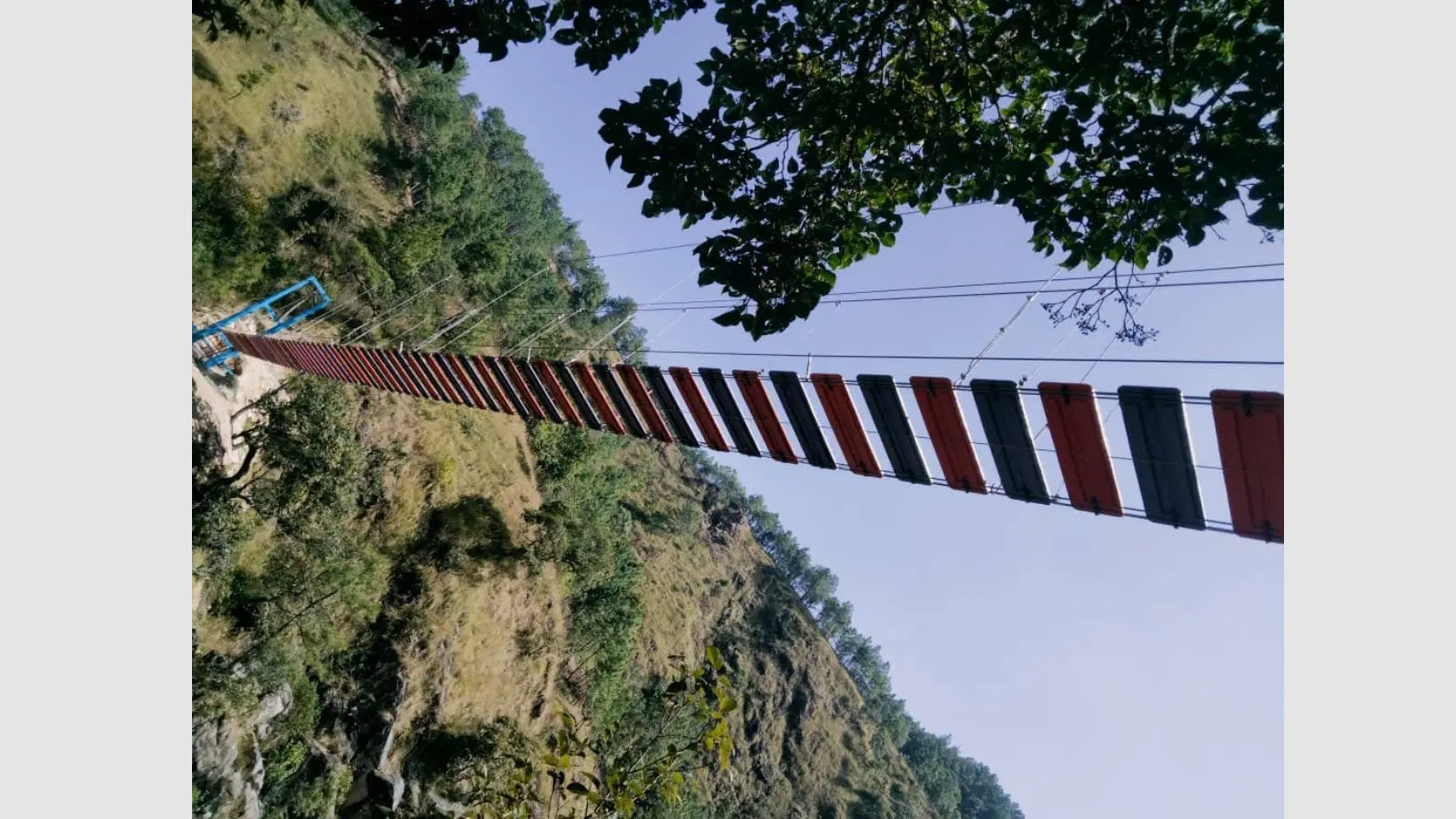
Cable-suspended glass walkway with visible movement underfoot. Maximises thrill perception while maintaining structural safety.

Engineering & Core Components

Glass Bridge and Sky Walk
Primary Bridge Structural Engineering
Bridge systems are engineered to carry pedestrian loads safely across the required span while controlling deflection and vibration.
Glass Panel System Integration
Laminated glass floor panels are specified and detailed to achieve strength, transparency, durability, and long-term serviceability.
Steel Frame & Support Design
Primary and secondary framing systems are engineered to support glass panels and transfer loads efficiently to foundations or anchor points.
Edge Protection & Safety Barrier Systems
Side railings, balustrades, and containment elements are integrated to ensure visitor safety while preserving openness and visibility.
Connection & Expansion Detailing
Connections are designed to accommodate thermal movement, structural tolerance, and long-term performance under outdoor conditions.
Visitor Flow & Viewing Experience Planning
Bridge width, pause zones, and entry/exit transitions are configured to support safe circulation and a high-impact visitor experience.

Safety as a System

High-Spec Structural and Glass Design
Bridge systems are engineered conservatively using laminated glass and structural framing designed for pedestrian loads, vibration control, and long-term durability.
Routine Glass & Frame Inspection
Glass panels, support frames, edge connections, and railing systems are inspected regularly for cracks, movement, seal failure, or surface damage.
Controlled Visitor Flow
User entry and bridge occupancy are managed to prevent congestion, support smooth circulation, and maintain comfort during crossing.
Surface Condition & Cleanliness Management
Glass walking surfaces are maintained for visibility, slip resistance, and safe user confidence under varying weather and usage conditions.
Operator Oversight & Emergency Preparedness
Bridge operations rely on clear supervision, practical response procedures, and straightforward access control rather than complex automated systems.
Projects We've Delivered
Implemented across adventure parks, resorts, and institutional recreation projects in India.

Indicative Glass Bridge and Sky Walk Installation Cost in India (2026)

  • Compact glass bridge / sky walk₹1.5–3 crore
  • Large / signature glass bridge₹3–8 crore+
  • Structural span and glass specification are the biggest cost drivers — longer spans and thicker laminated glass raise both the engineering and the price.
  • High-spec laminated safety glass, edge and anchor detailing, and tourism-grade finishing add to the cost.
  • Site accessibility and foundations matter — remote or elevated sites and deep footings increase the investment.
  • OXO delivers glass bridges and sky walks both as turnkey builds and as an engineering-and-consulting partner; price covers structural design, steel, laminated glass and installation.
  • GST extra; site development is quoted separately. Typical build timeline is 3–5 months from design sign-off to commissioning, with final scope following a site and structural survey.
Planning a Glass Bridge or Sky Walk? Let's Talk.
Tell us your span, your site, and the views you want to open up — we'll advise on the structure and glass spec and share an indicative scope and quote.

Where We've Built Glass Bridges & Sky Walks

OXO Planet designs and installs glass bridges and sky walks at adventure parks, resorts and tourism destinations — from tower-mounted multi-level sky walks to scenic elevated walkways — engineered with laminated safety glass and steel to fall-from-height standards.

Featured Projects

  • D Splash Bungee, Rishikesh — a two-floor sky walk built on a bungee tower, delivering panoramic aerial views over the Ganges as part of one of India's most extreme adventure setups.

FAQs on Glass Bridge and Sky Walk Setup

How much space is required to install a glass bridge or sky walk in India?

A glass bridge or sky walk requires space proportional to its span length, typically starting from 10 to 15 metres for compact installations and extending to 50 metres or more for landmark structures. Beyond the walking surface, adequate approach zones, queuing areas, ticketing space, and safety buffers are essential. Final requirements are confirmed after site assessment and structural design.

Can a glass bridge or sky walk be installed on flat land, or does it require height?

Glass bridges and sky walks are most impactful when installed at elevation, where the transparent floor creates a genuine sense of height and visual drama. However, low-elevation installations are possible for indoor attractions or architectural features. Natural height from cliffs, hills, or elevated structures delivers the strongest visitor experience.

What approvals or permissions are required for a glass bridge or sky walk in India?

There is no single national approval specific to glass bridges in India. Projects typically require local municipal permissions, structural safety approvals, landowner consent, and — for public tourism sites — state tourism department clearances. Projects on forest land, government reserves, or heritage zones may require additional environmental or heritage approvals depending on the location.

Is a glass bridge or sky walk safe for public use in Indian conditions?

Yes, glass bridges and sky walks are safe for public use in India when designed with laminated safety glass, conservative structural engineering, and robust edge protection systems. Safety depends on high-spec glass specification, routine inspection of panels and connections, controlled visitor occupancy, and trained operational staff.

Can glass bridges and sky walks operate year-round in Indian weather?

Most glass bridges and sky walks in India can operate year-round. Outdoor operations may be temporarily paused during extreme rain, high winds, or adverse weather conditions. Glass panels are typically engineered with anti-slip coatings for wet conditions, and structural design accounts for thermal expansion and seasonal temperature variation.

What kind of maintenance does a glass bridge or sky walk require?

Maintenance involves regular inspection and cleaning of glass panels, checking structural connections and expansion joints, inspecting edge protection and railing systems, and monitoring for surface damage or seal failure. Anti-slip coatings on walking surfaces require periodic reapplication, and the overall structure is assessed at defined intervals for long-term structural integrity.

Who can operate and manage a glass bridge or sky walk on a daily basis?

Glass bridges and sky walks are managed by trained on-site staff responsible for visitor entry, occupancy control, surface cleaning, and emergency response. No specialised engineering background is required for daily operations, but staff must follow defined visitor flow protocols and conduct pre-opening visual inspections each day.

What capacity can a glass bridge or sky walk handle per hour?
As a walk-through attraction, a glass bridge or sky walk moves a high, steady flow of visitors — typically 100–300 per hour depending on length, width and pacing. Deck length and crowd management are the main drivers.
How much revenue can a glass bridge or sky walk generate?
A glass bridge or sky walk is a marquee, photo-driven attraction sold via ticketed entry, commanding premium pricing and high throughput, and it can single-handedly draw tourism footfall to a destination. Actual returns depend on location, footfall and pricing — we can share indicative models during planning.
How long does it take to install a glass bridge or sky walk?
A glass bridge or sky walk usually takes about 12–20 weeks to install, given the structural span, glass decking, anchoring and safety engineering. The final schedule follows a site assessment.
What factors should be considered while planning a glass bridge or sky walk project in India?

Key planning factors include available elevation and natural setting, structural feasibility, visitor capacity targets, site accessibility, glass specification, foundation requirements, and long-term maintenance planning. Early alignment on the visual experience goal — whether scenic, thrill-oriented, or architectural — is critical, as it directly influences the structural and design approach.

Related Bridges & Walkways

More activities in Bridges & Walkways — engineered for safety, throughput, and long-term operations. Explore other systems in this category built by OXO Planet.
Contact Us

Let’s start the adventure!

For project-level discussions, a brief call or WhatsApp conversation helps us understand your requirements faster and respond more accurately.

Say hello

Location

1st floor, C, 2/10, Block B, Mayapuri Industrial Area Phase II, Mayapuri, New Delhi, Delhi, 110064
We operate with a focused project team. For urgent queries, calling us ensures quicker response.