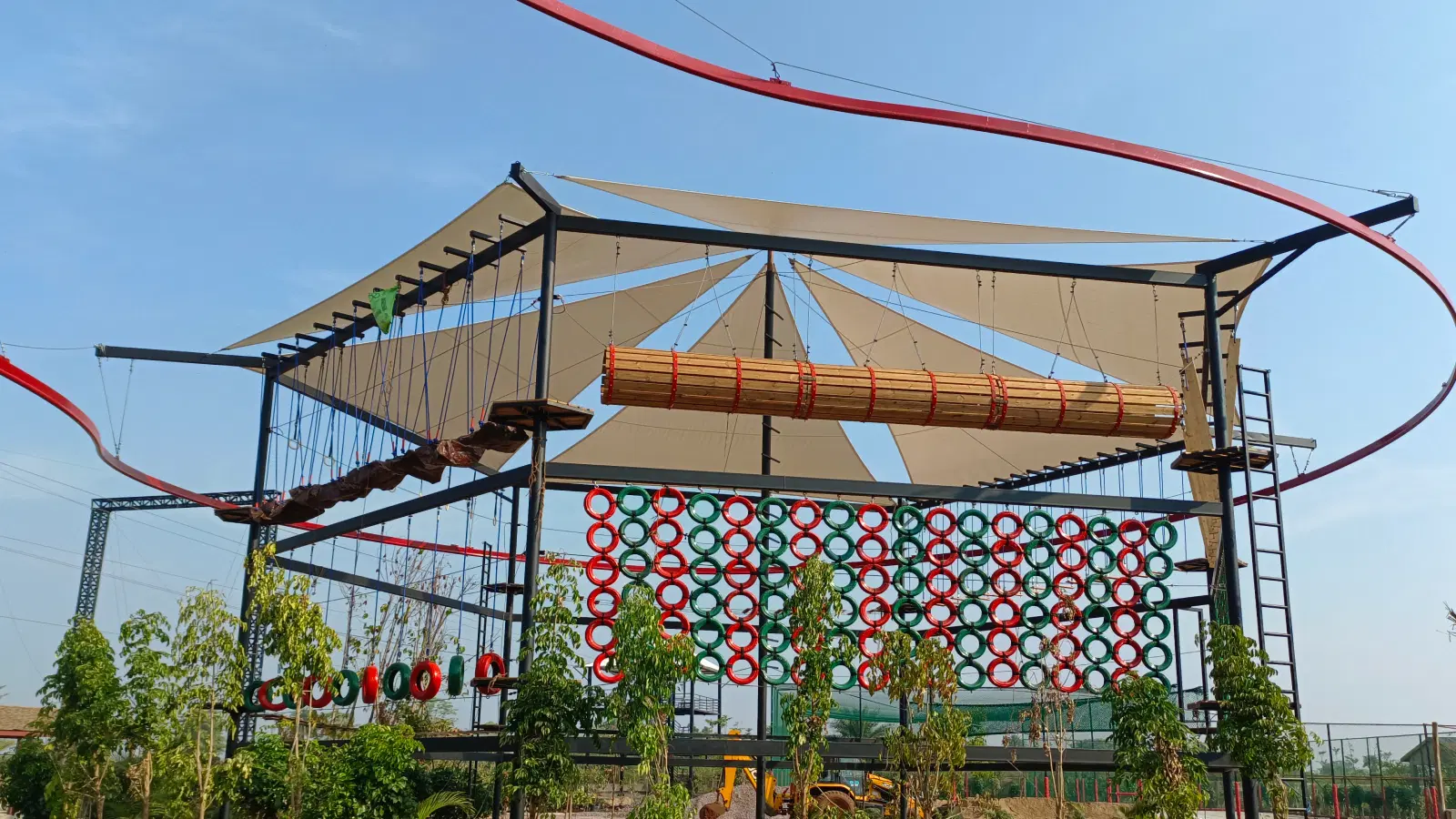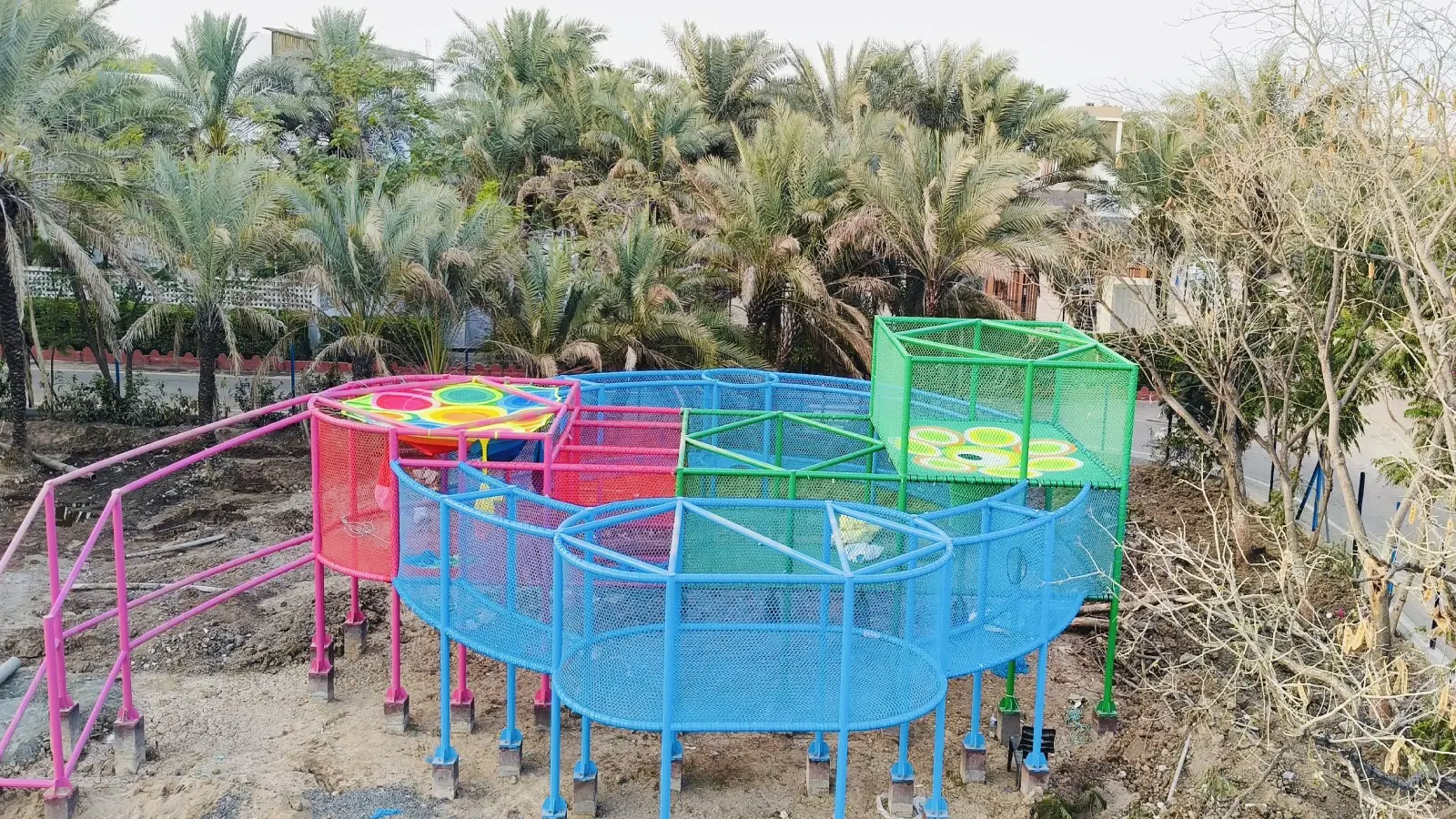
Adult Obstacle Course & Ninja Challenge Installation

Adult Obstacle Course & Ninja Challenge Installation

Skill-based physical challenge systems inspired by competitive movement. Designed for events, fitness engagement, and repeat participation.

What It Is & Why It Matters

An obstacle course is an engineered sequence of physical challenges — climbs, crawls, balances and swings — laid out as a continuous circuit that tests strength, agility and teamwork. Built to standard, each element is load-rated and fall-protected and the flow is designed for safe, high-throughput use.

For schools, resorts and adventure parks it is a versatile, high-engagement attraction that scales to any age group and footprint, and forms the backbone of many adventure and team-building destinations.

OXO Obstacle Courses — By the Numbers

India's largest in-campus park
8+ activities incl. obstacle course at Sreenidhi International School, Hyderabad.
President's Estate
Obstacle activities for children at Rashtrapati Bhavan.
70+ projects · 300+ activities
OXO Planet's track record across 100+ sites in 20+ states, India and Nepal.

Key Business Outcomes

  • Strong appeal to fitness-oriented demographics
  • Event, competition, and league potential
  • High repeat participation through challenge formats
  • Suitable for branding, sponsorships, and promotions
  • Clear differentiation from passive adventure attractions
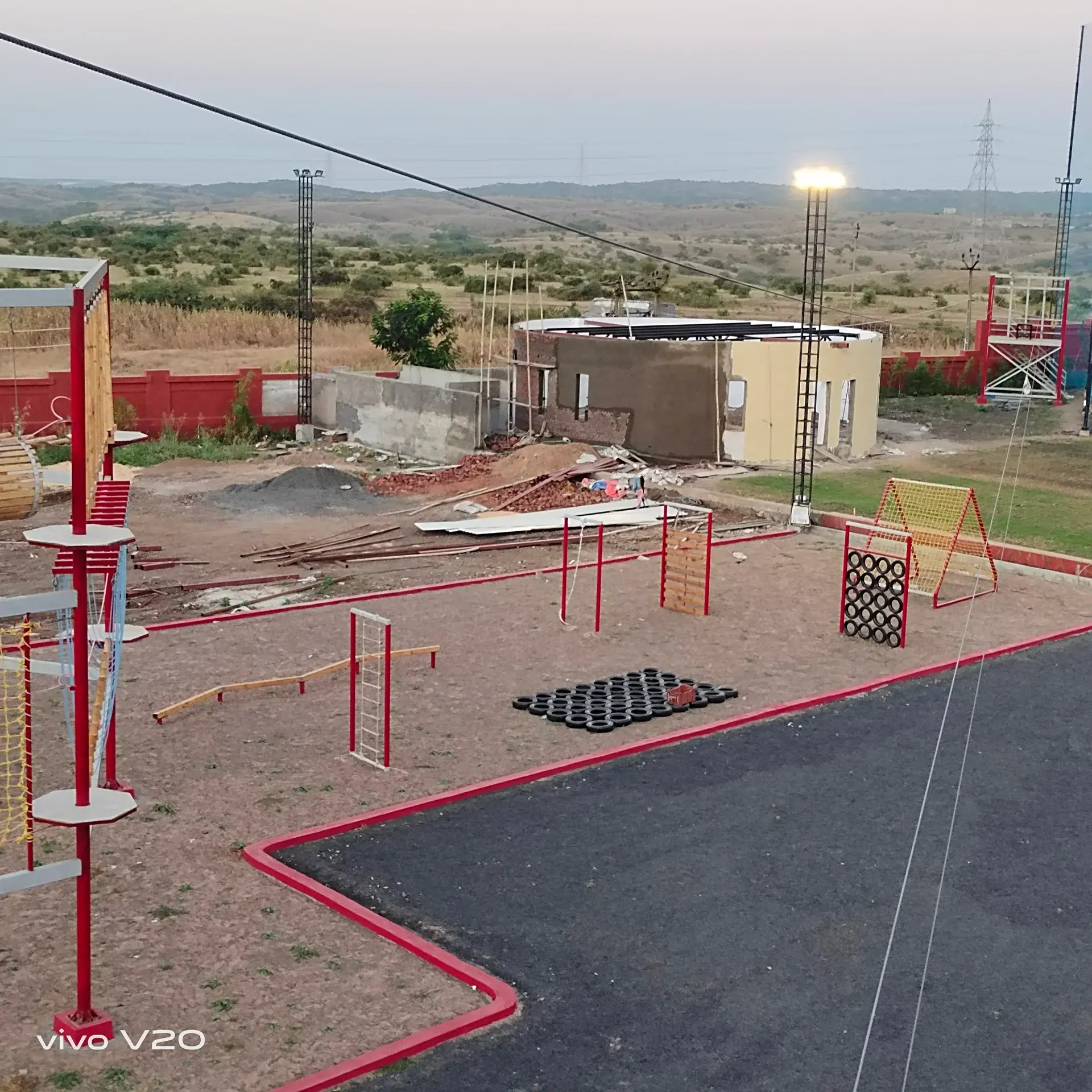
Obstacle Course

Where This Works Best?

Fitness-Oriented Parks
Skill-based challenge environments
Urban Adventure Facilities
Competitive and event-driven installations
Corporate Event Venues
Timed challenges and team competitions
Youth & Sports Centres
High-intensity physical engagement zones

Types & Configurations

01. Linear Obstacle Course
Start-to-finish layouts guiding participants through a sequence of challenges in a defined progression.
02. Ninja-Style Competitive Course
Skill-intensive obstacle setups inspired by competitive formats, designed for timing, scoring, and events.
03. Modular Obstacle Layout
Flexible obstacle arrangements that can be reconfigured or expanded over time to refresh the experience.

Engineering & Core Components

Modular steel obstacle frames
Hot-dip galvanised steel frames engineered for repeated dynamic loads and laid out to suit your space.
Competition-grade elements
Warped walls, cargo nets, monkey bars, rings, ramps and precision grip holds built to ninja-course standards.
Impact matting & fall zones
Rubber or foam safety matting under and around ground-level obstacles for safe landings.
Optional timing & scoring
Add timing gates and scoring to run a competitive ninja-style course and events.

Safety as a System

Impact-Resistant Structural Design
Obstacles are designed to handle repetitive physical use.
Surface Condition Monitoring
Grip and contact surfaces are checked for wear.
Clear Movement Path Definition
Layouts guide users to reduce collision risk.
Operator Presence During Use
Courses are supervised during active sessions.
Projects We've Delivered
Implemented across adventure parks, resorts, and institutional recreation projects in India.

Indicative Obstacle Course Installation Cost in India (2026)

  • Standard obstacle course₹15–30 lakh
  • Competitive ninja course₹50 lakh – ₹1 crore+
  • Obstacle count and type are the main cost drivers — custom and competition-grade elements (warped walls, precision grips, timing) push the price up.
  • OXO's courses are mostly ground-level over safety matting, so they are compact and need no tall structure.
  • Modular systems let you invest in phases and expand the course over time.
  • Indoor installations cost more (structure, flooring and lighting); GST and site development are quoted separately.
  • Typical build timeline is 4–6 weeks from design sign-off to commissioning; the final price follows a site assessment.
Planning an Obstacle Course? Let's Talk.
Tell us your space, indoor or outdoor, and whether you want a fun modular course or a competition-grade ninja setup — we'll propose a layout and share an indicative quote.

Where We've Built Obstacle Courses

OXO Planet builds obstacle and ninja-style courses for schools, resorts, adventure parks and institutions across India and Nepal — including a children's obstacle course at Rashtrapati Bhavan, the presidential estate in Delhi.

Featured Projects

FAQs on Obstacle Course Setup

How much does an obstacle course cost in India?
A standard obstacle course is around ₹15–30 lakh, while a competition-grade ninja course runs from ₹50 lakh to ₹1 crore or more, depending on the number and type of obstacles. GST, civil work and site development are extra, and the final price follows a site assessment.
How much space is required to install an obstacle course in India?

Obstacle course space requirements depend on the number of obstacles, layout type (linear, looped, or modular), and target user group. Compact courses can fit within limited footprints, while competitive or ninja-style courses require larger areas for safe movement and circulation. Final space planning is confirmed after layout design.

Can obstacle courses be installed indoors, outdoors, or both?

Obstacle courses can be installed both indoors and outdoors in India. Indoor courses depend on ceiling height and floor loading capacity, while outdoor courses require weather-resistant materials and proper drainage. The choice depends on site conditions, usage frequency, and budget.

What approvals or permissions are required for obstacle courses in India?

There is no single national approval specific to obstacle courses in India. Installations generally require local municipal permissions, property owner consent, and internal safety approvals. Additional permissions may apply for public, school, or government-owned sites depending on state regulations.

Are obstacle courses safe for first-time users and mixed age groups?

When designed with graded difficulty levels and supervised operation, obstacle courses are suitable for first-time users and mixed age groups. Safety depends on conservative obstacle design, impact-absorbing surfaces, trained supervision, and controlled participant flow rather than automation.

Can obstacle courses operate year-round in Indian conditions?

Indoor obstacle courses typically operate year-round. Outdoor obstacle courses may pause operations during heavy rain or extreme weather. Seasonal operating guidelines are usually established during the planning stage to ensure safe use.

What kind of maintenance does an obstacle course require?

Obstacle course maintenance includes regular inspection of structural frames, grips, moving elements, and landing surfaces. Wear-prone components require routine tightening, replacement, or servicing to maintain safe operation.

Who can operate and supervise an obstacle course on a daily basis?

Obstacle courses are operated by trained staff or facilitators. Operators are trained in participant briefing, flow control, supervision, and basic emergency response. No specialised engineering background is required for daily operations.

What footfall or capacity can an obstacle course handle per hour?
As a continuous circuit, an obstacle course typically moves 30–60 participants per hour per lane in a timed or staggered-start format; parallel lanes and extra stations increase throughput significantly. Schools and camps usually run supervised batches of 15–30. The main drivers are course length, the number of parallel paths and staffing.
How much revenue can an obstacle course generate?
Obstacle courses are high-repeat, group-friendly attractions. Commercial operators charge per timed run or session, or bundle the course into an adventure-park or FEC ticket, and it pairs well with other activities to lift per-head spend and dwell time. For schools and institutions it is usually a capex that supports fitness, events and admissions appeal rather than direct ticketing. Actual returns depend on location, footfall and pricing — we can share indicative models during planning.
How long does it take to install an obstacle course?
A standard obstacle course usually installs within 1–3 weeks on a prepared site, depending on the number of elements, ground conditions and whether foundations are needed. Larger competition-grade or ninja courses take longer. The final schedule follows a site assessment.
What factors should be considered while planning an obstacle course project in India?

Key planning factors include available space, target user profile, obstacle difficulty progression, indoor or outdoor installation, supervision capability, and long-term maintenance planning. Early alignment of these factors supports both safety and commercial viability.

Contact Us

Let’s start the adventure!

For project-level discussions, a brief call or WhatsApp conversation helps us understand your requirements faster and respond more accurately.

Say hello

Location

1st floor, C, 2/10, Block B, Mayapuri Industrial Area Phase II, Mayapuri, New Delhi, Delhi, 110064
We operate with a focused project team. For urgent queries, calling us ensures quicker response.